
Collaborative Pitch Deck: The Pantheon
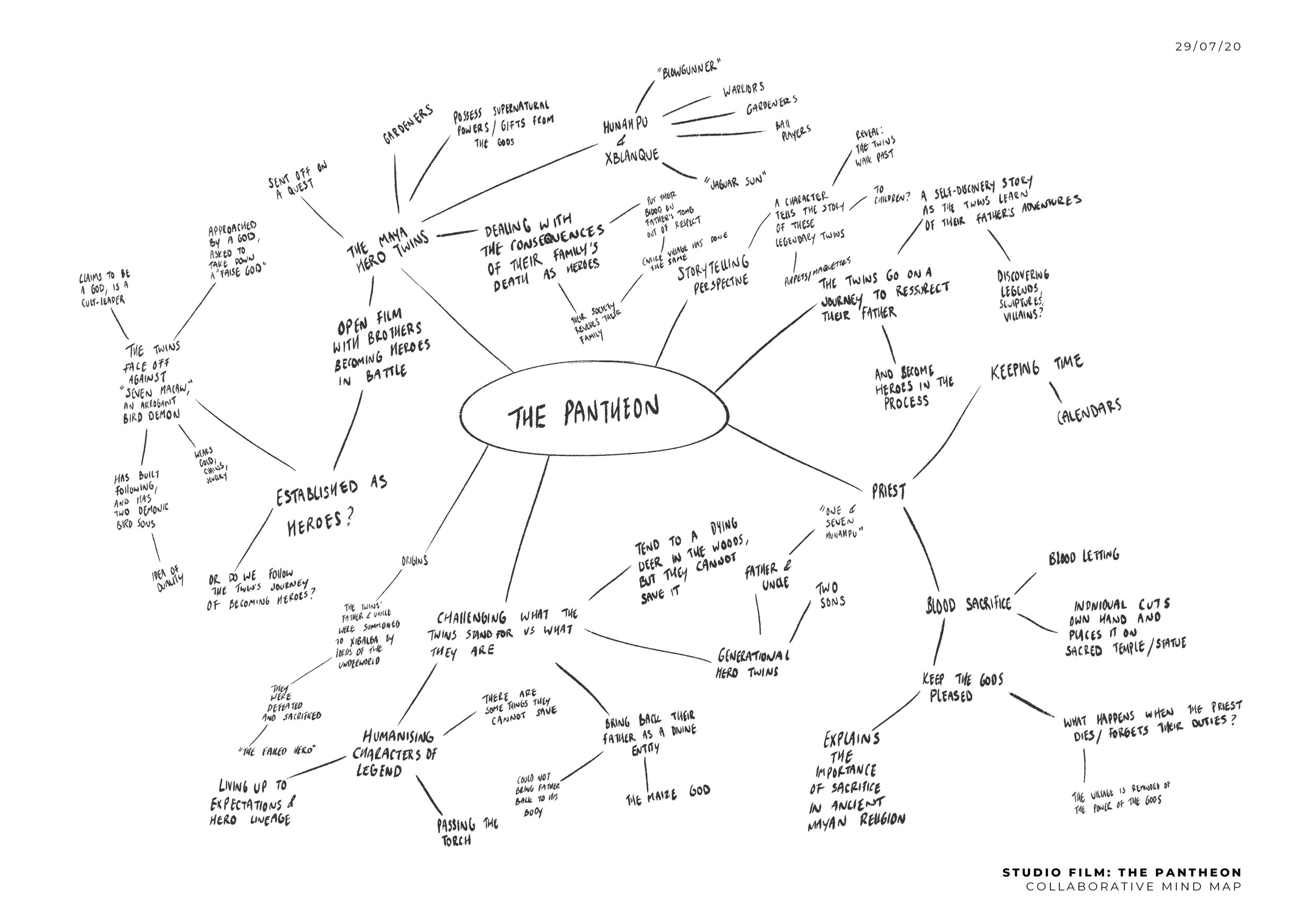
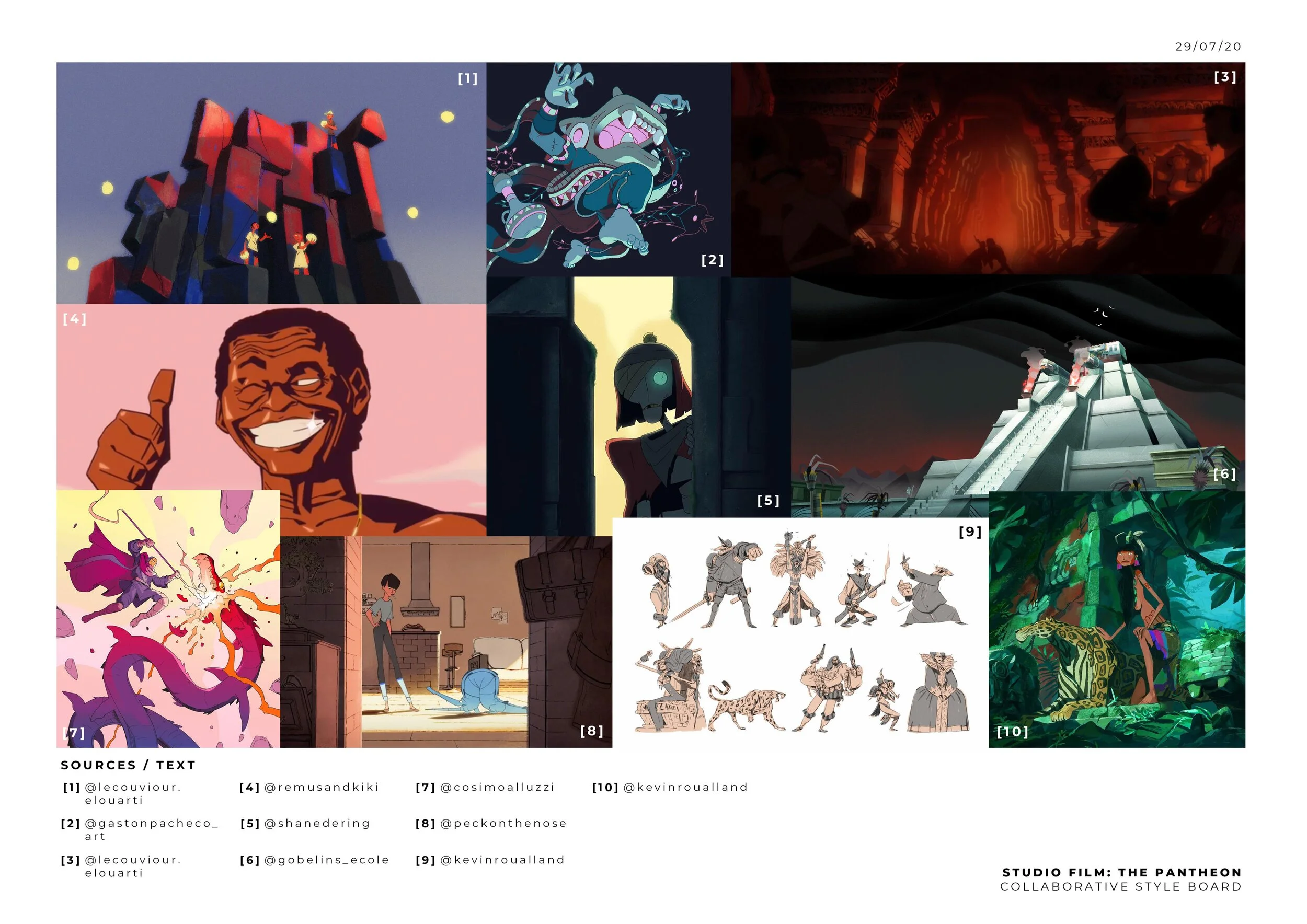
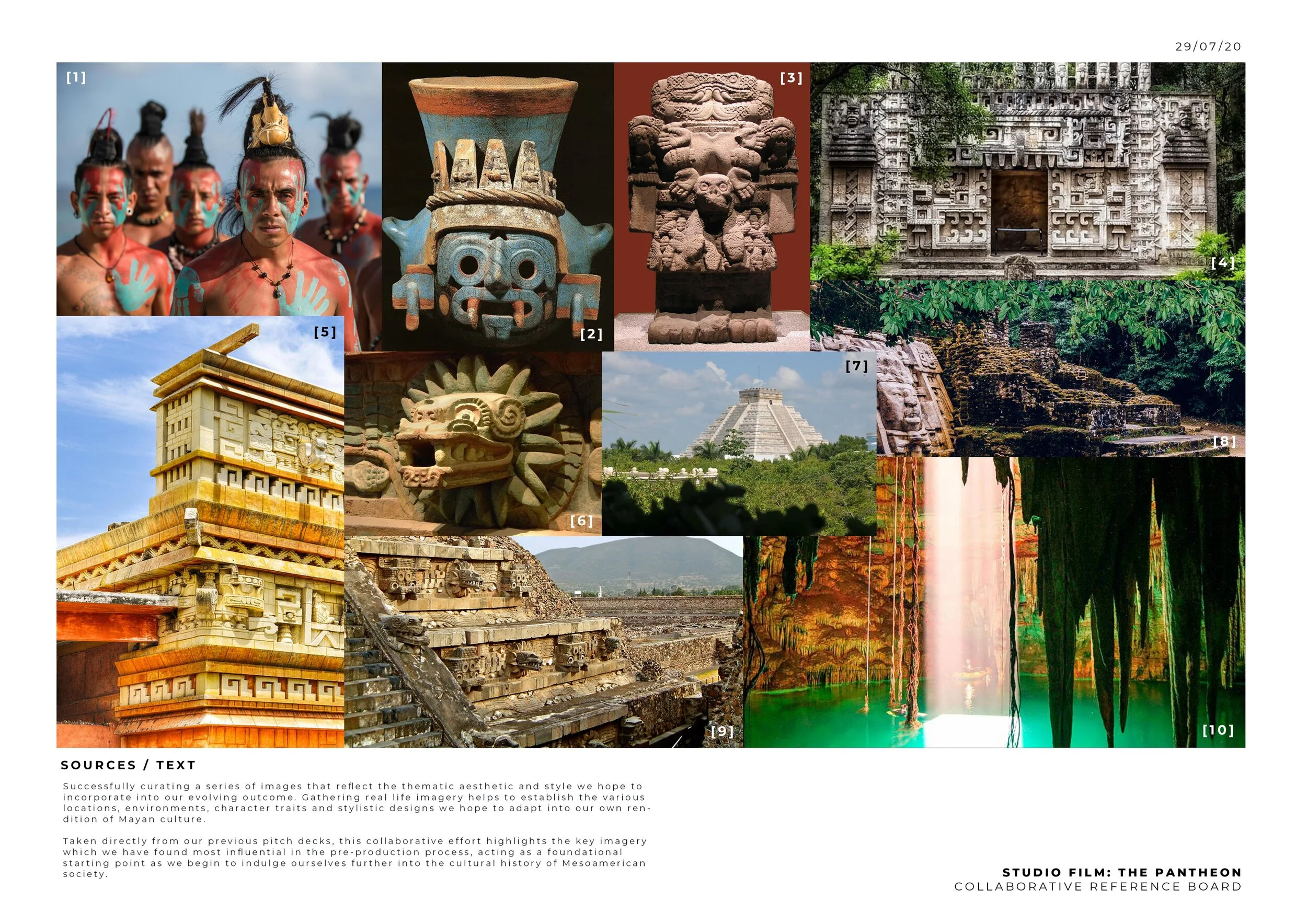
With this post, I am to discuss the process of developing a collaborative pitch deck and some of the significant narrative aspects we hope to pursue moving further. Previously, Jack and I had developed ‘pitch decks’ independently as a document to pitch our ideas. With this third iteration, however, we both felt it was time to begin working collaboratively and combining our ideas into a single pitch document. This deck would similarly comprise a mind map, reference board, style board, and pieces of concept art to showcase our initial vision for the project, but we would complete each page collaboratively. This collaborative document marks a significant landmark in the initial concept timeline, as we begin to round off the initial idea exploration phase and move towards developing and refining a narrative.
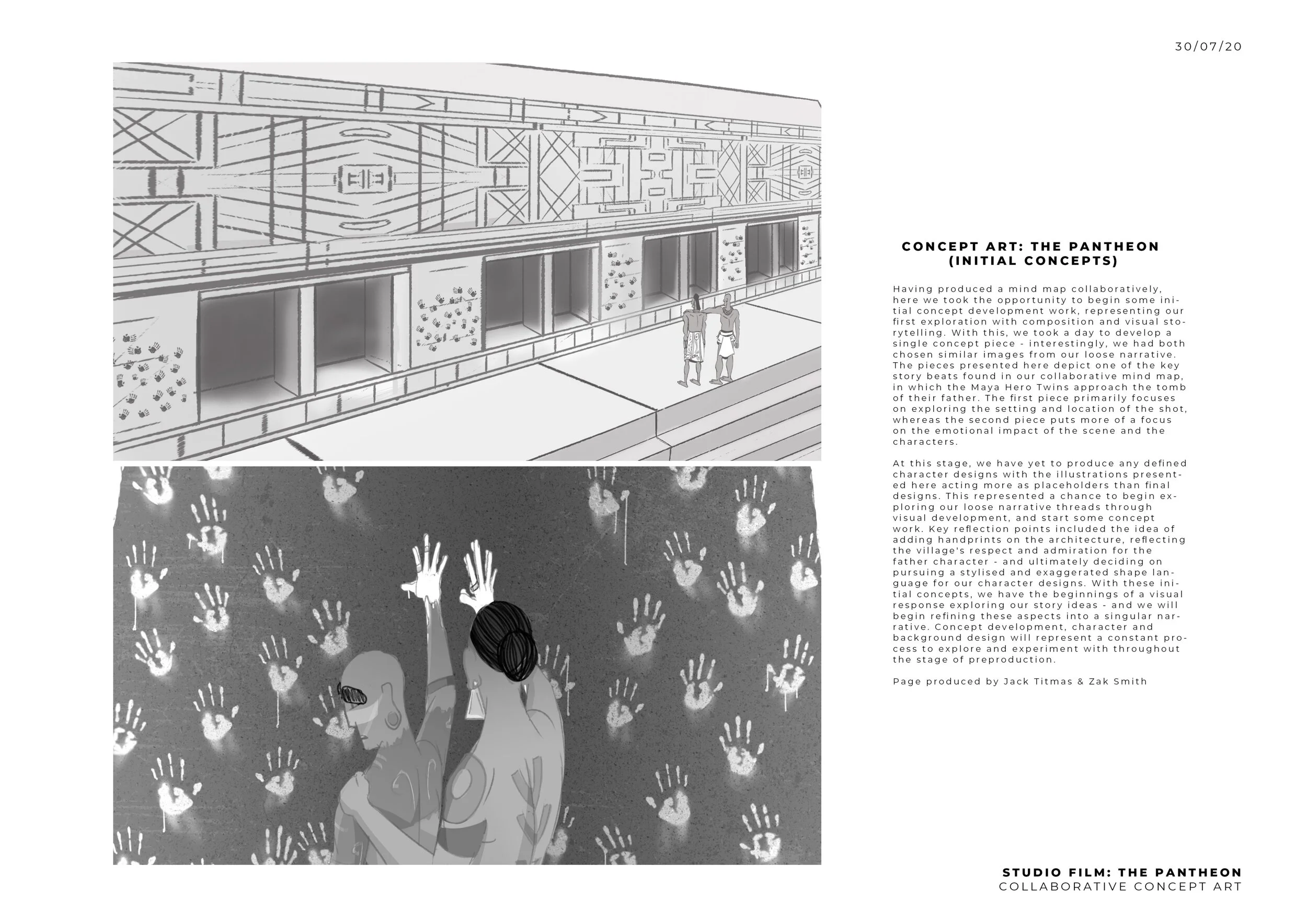
Having chosen to explore the rich tapestries woven by the ancient Maya in the Popol Vuh and featured on codices and murals, we also were able to narrow down our focus to exploring the lives of the Maya Hero Twins, Hunahpu and Xblanque. After discussing the various narrative directions, we both felt that there was real potential in exploring the generational plight of the Hero Twins against the Underworld Lords, traveling to Xibalba to avenge their fallen father and uncle. After being able to depict any moment from our initial narrative, we both chose to visualize a similar scene for our concept pieces, exploring a pivotal point in the story when our heroes remember their father alongside their community.
As a first attempt at background design and perspective drawing, I was relatively happy with my concept piece, taking inspiration from the impressive Maya temples and architecture found in Tikal and Palenque, Mexico. The character sketches were somewhat rushed, but I look forward to exploring the look and design of this film as we progress into actual preproduction stages of the project.
With this, the character illustrations here act more as placeholders than final designs. This document represented a chance to begin exploring our loose narrative threads through visual development, and start some rough concept work. Key reflection points from this pitch included adding handprints on the architecture, reflecting the city’s respect and admiration for the father character - and ultimately deciding to pursue a stylized and exaggerated shape language for our character designs. With these initial concepts and image reference boards, we have the beginnings of a visual response exploring our story ideas - and we will begin refining these aspects into a singular narrative.
After discussing our work collaboratively, we both felt more confident in pursuing this further - with this short document reflecting our ability to work together effectively and efficiently as creatives. Produced over the short span of a couple of days, this third pitch deck represents the first piece of work following a shared narrative theme and concept. With this, we are beginning to lay the groundwork for a considered, exciting, and challenging graduate film project. After producing the work here and discussing some of the potential narrative directions for our film, we both feel enthusiastic about the project, and the opportunities following it could provide.
With a primary theme and pitch of exploring the lives of the Hero Brothers and their adventures against gods and monsters from ancient Maya texts, we have arrived at an essential time in the concept development stage of our project. A crucial next step would be to conduct extensive research into this subject area, as Jack and I are planning to delve into online and print resources surrounding ancient Maya culture and religion. Not only studying these sources but also researching out to series of historians and Mayanist scholars to provide an established insight into our initial ideas, which would represent a chance to open a conversation about ancient Maya life, but also the implications of our graduate film. This contact will be a necessary step to ensure we approach this subject matter with respect and appreciation; a chance to conduct essential primary research to use as key references and guidance as we progress into developing a narrative and visual language for the film.