
Developing a Second Pitch Deck
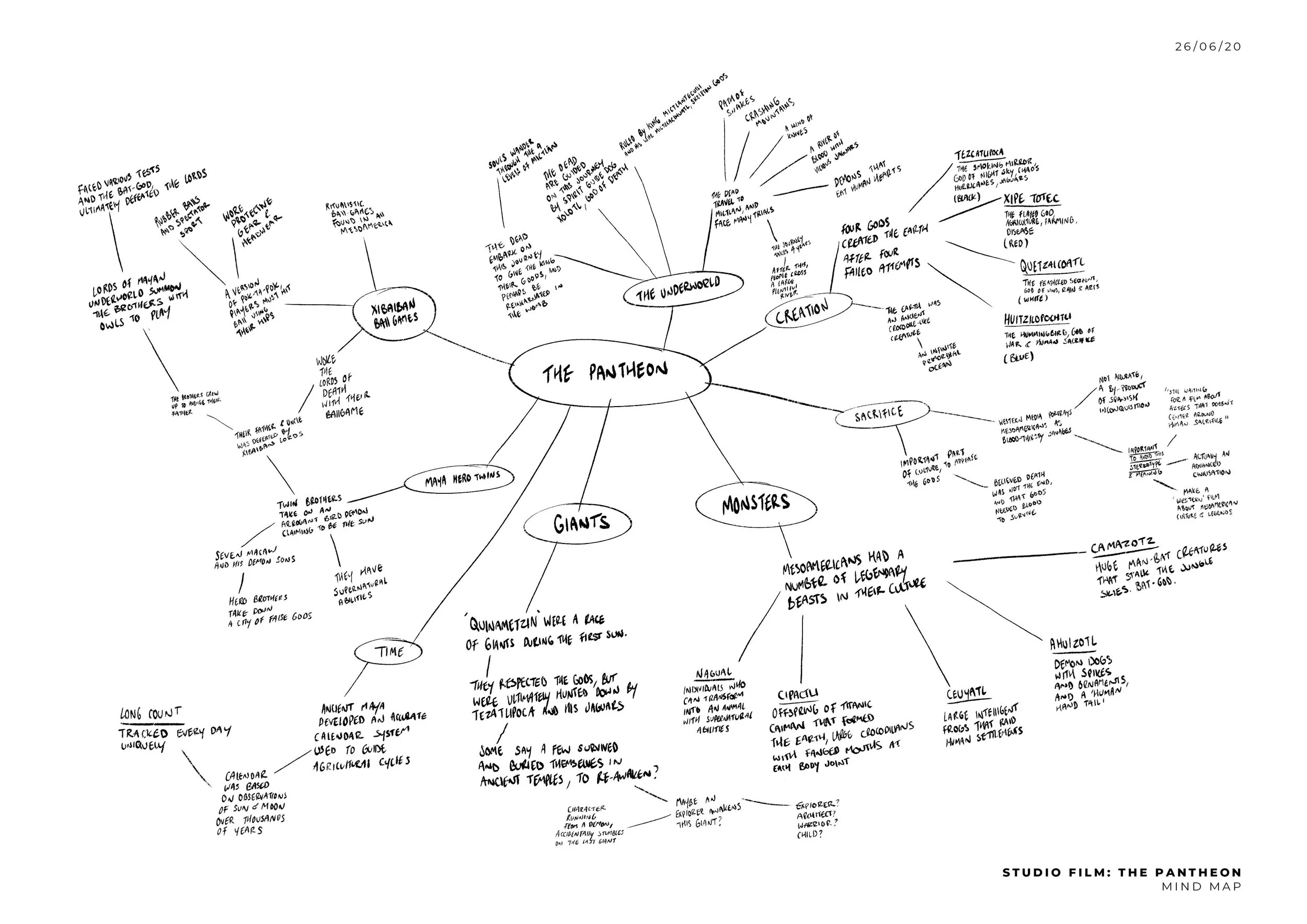
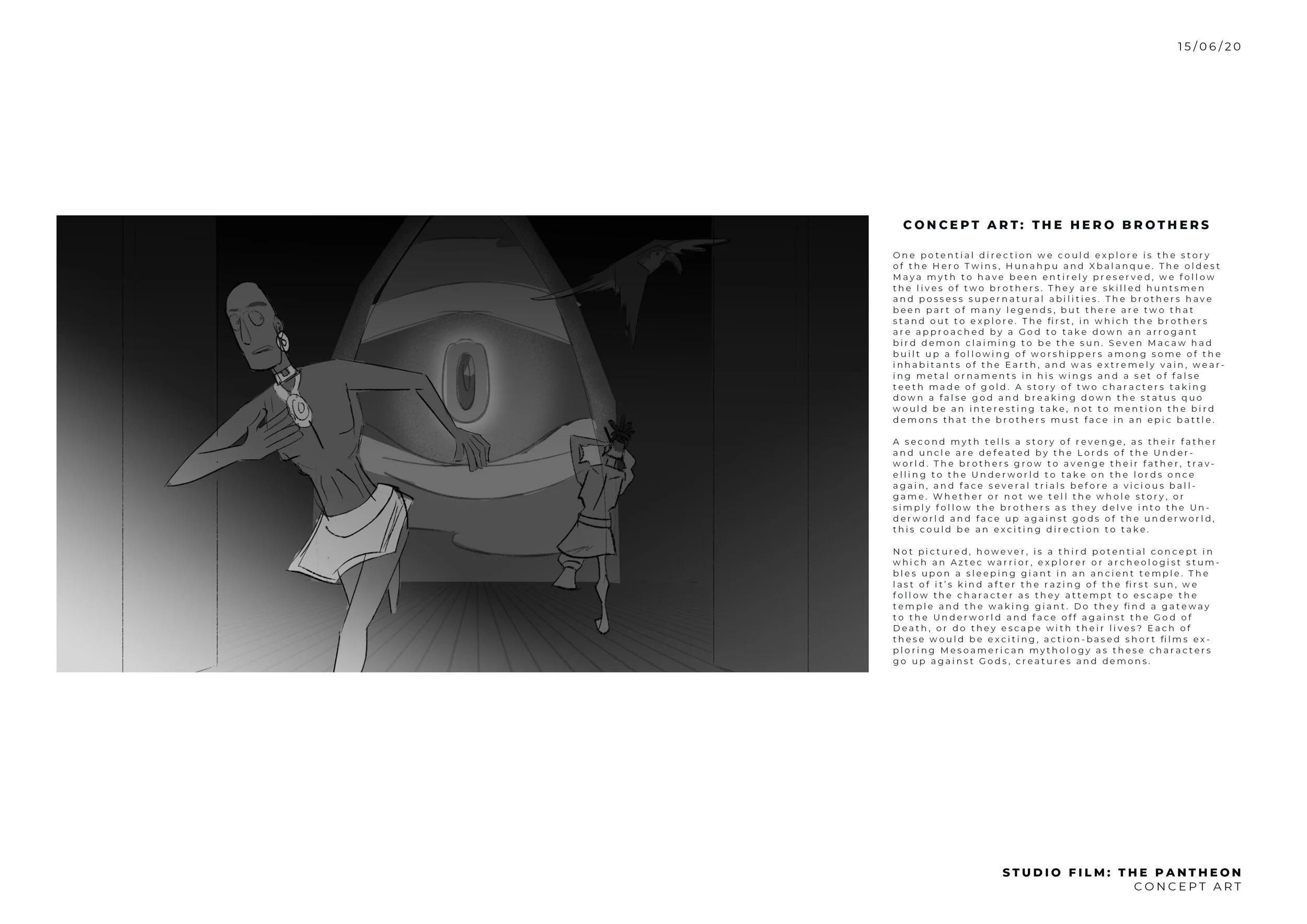
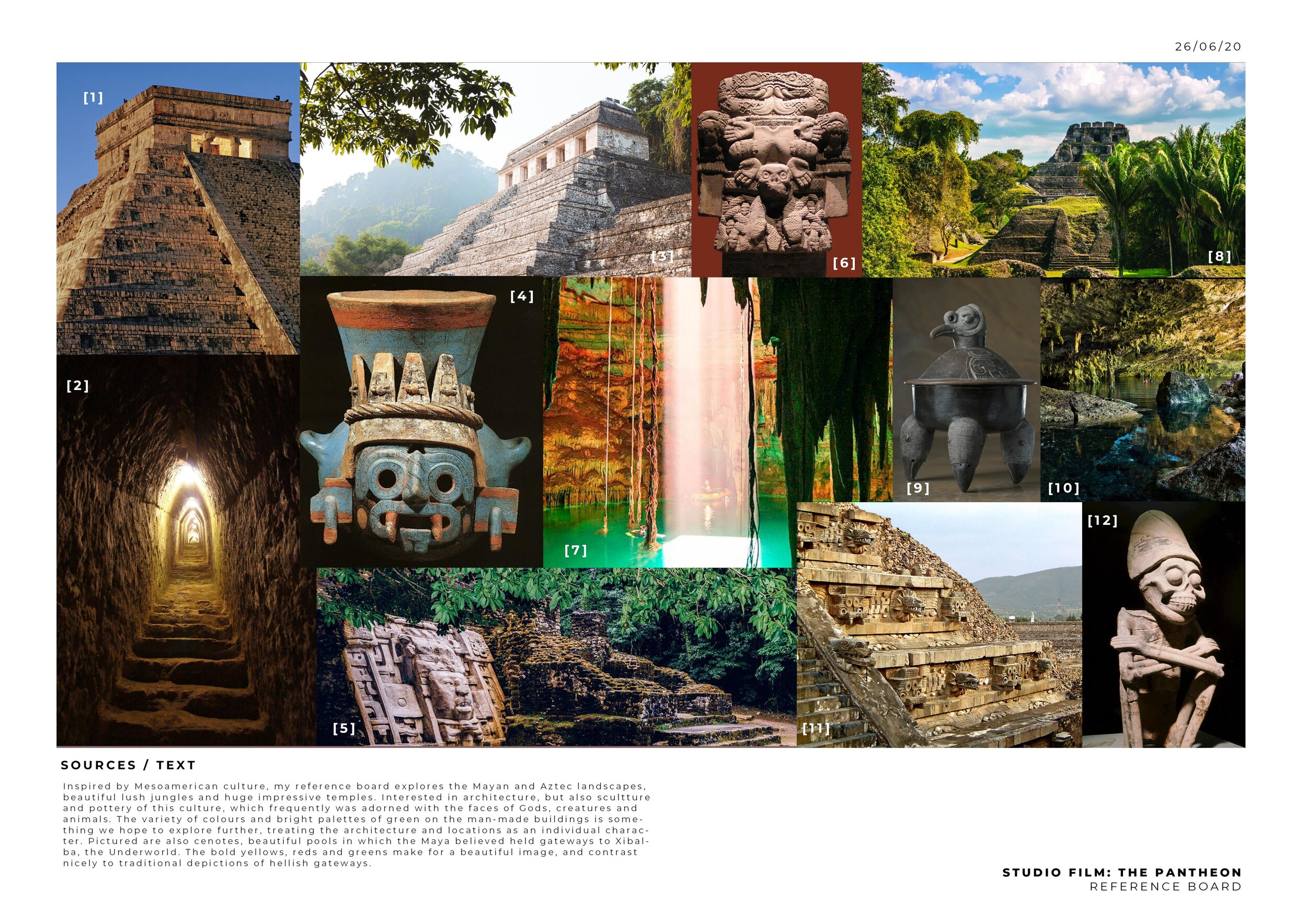
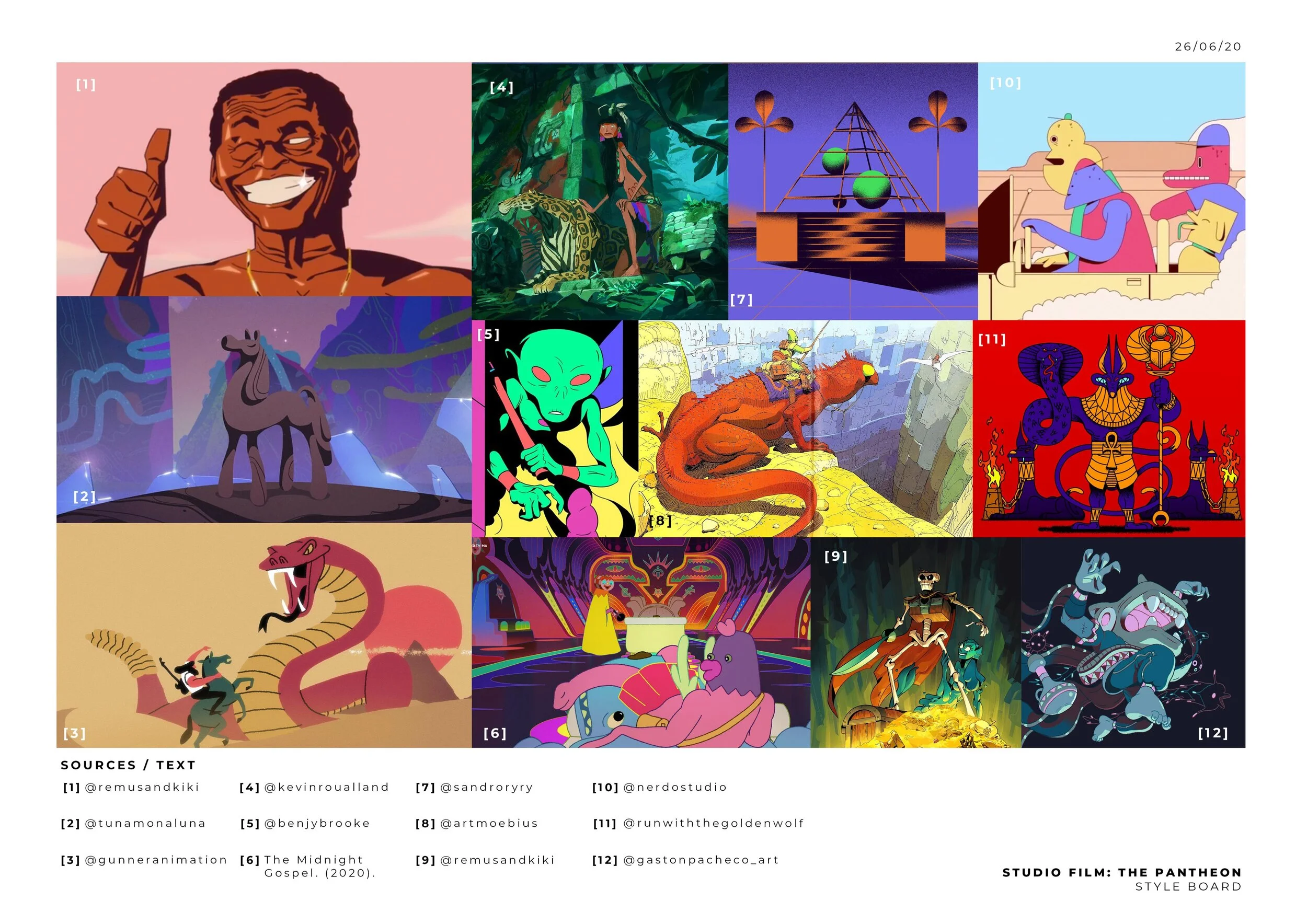
In this blog post, I aim to discuss some of the key steps in developing a second pitch deck. With the chosen theme and working title of ‘The Pantheon,’ the next step was to create another pitch deck document. This deck comprises of a mind map, reference board, style board, and a single piece of concept art to showcase our developing ideas and initial vision for the project. Having identified the chosen theme of exploring ancient Mesoamerica and working independently, we could look at the creative and narrative aspects that intrigue us as artists and compare them during the second pitch. Before developing work collaboratively, we both felt it was essential to take the time to explore the project concepts individually to ensure we can bring new ideas to the table and complete the necessary research for this subject.
The first step in producing this document was building a narrative mind map, exploring a series of potential story points, and interesting ideas from both Aztec and Maya legend. From this map, I identified that pursuing the legend of the Hero Twins, Hunahpu, and Xblanque is the most exciting direction and developed a quick concept illustration seeing the twins escape the lair of the giant bird demon, Seven Macaw. With each idea exploring ancient mythology and legendary characters, I felt this had strong potential to tell an engaging story and bring a sense of understanding and appreciation of the ancient Maya to a Western audience while avoiding the stereotypical images of human sacrifice and religious savagery.
As a brief overview of my intended aesthetic and visual language, we would be pursuing a highly colorful design, with bright reds, yellows, greens, and exaggerated character designs. Taking influence from not only animation director Kevin Roulland and Remus and Kiki, but also the vast array of fantastic Maya artwork and paintings readily available on pottery, surviving documents and codices. With this, we would be taking steps to develop an engaging, compelling, and dynamic visual language full of vivid color, beautiful architecture, nature, and fierce deities. Looking at the picturesque Cenotes and impressive ancient temples presented on the reference board, we can see a wealth of inspiration readily available to develop a stunning and unique aesthetic for our film.
Finally, we opted to develop and follow a formatted template to ensure a level of visual cohesion and design consistency between our work. As the first opportunity for us to build concept work around the same base theme and idea, this would ultimately allow for ease of presentation and showcase our work in the future. With the work presented here, I feel confident in pitching the Hero Twins legend as the principal direction to pursue further and look forward to pitching my ideas to teammate Jack in the coming week.