
MayaVase Online Database: Visual Language of the Maya
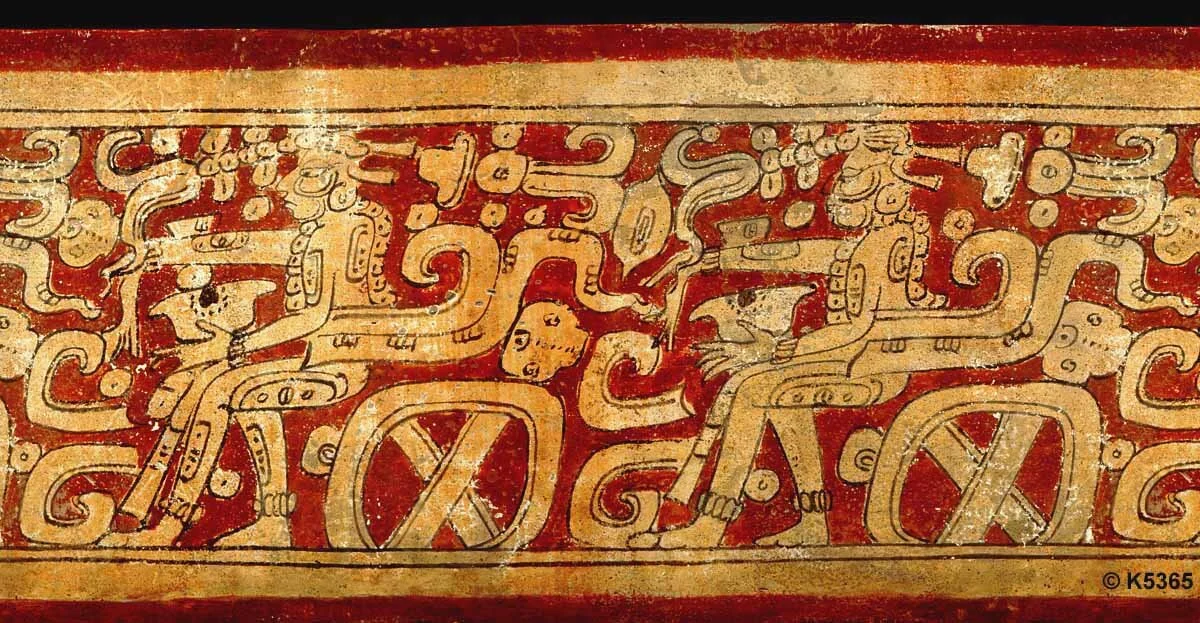
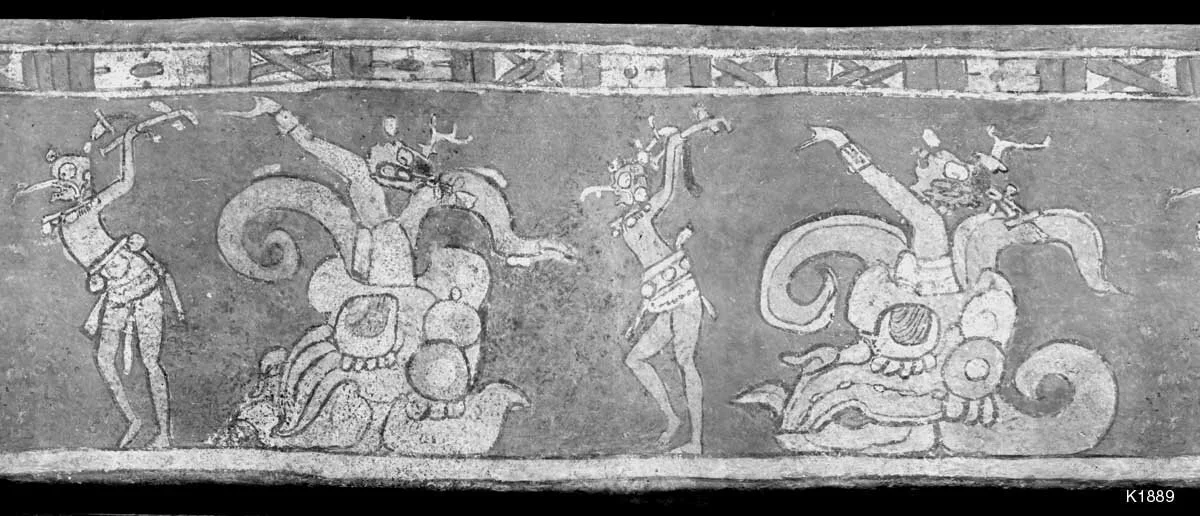
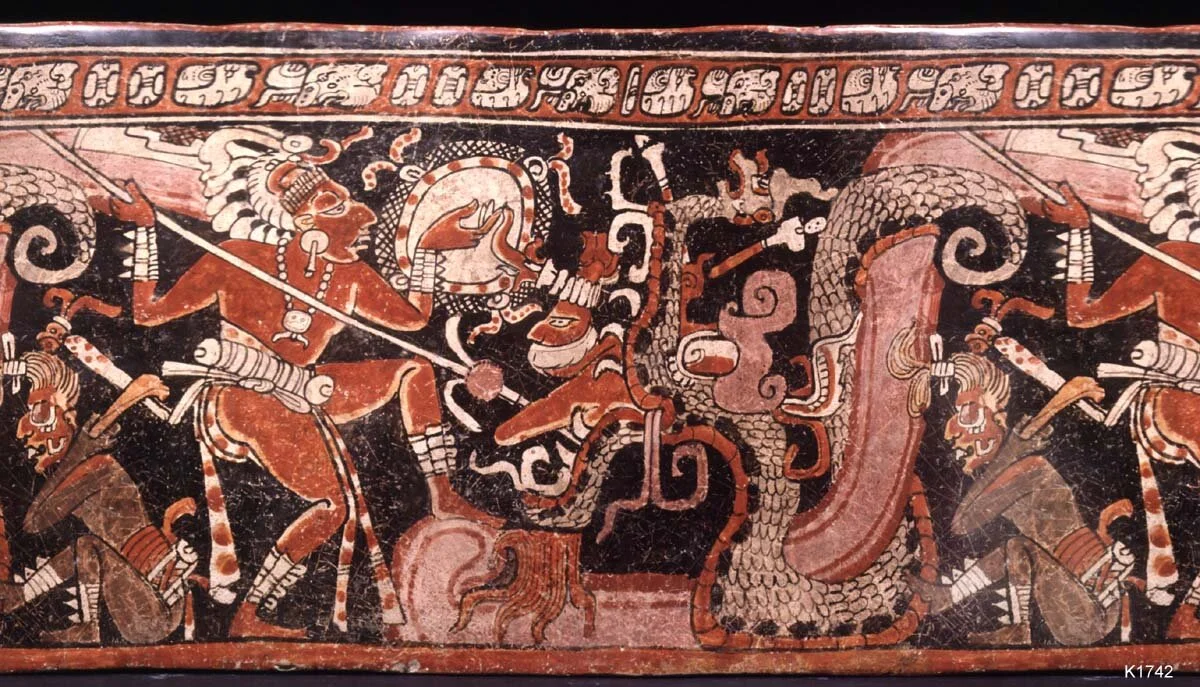
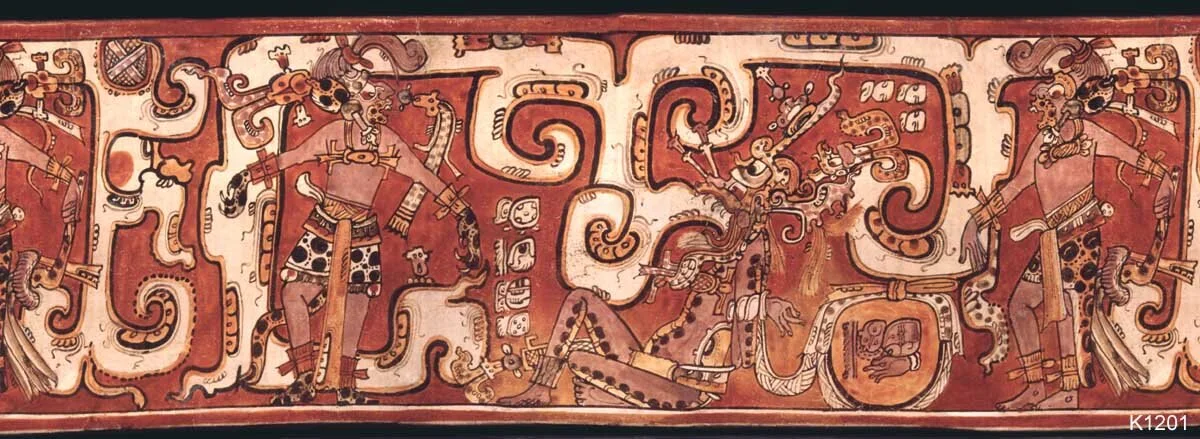
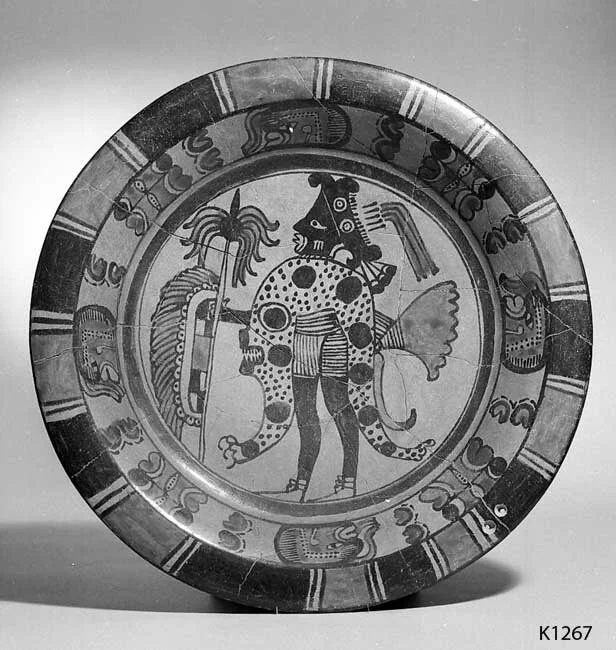
Moving on from the ‘Popol Vuh’ animated film from Patricia Amlin, the next key resource provided by archaeologist and scholar Stephen Houston was an incredible database of ‘rollout photographs’ of Maya ceramic vessels - plates, bowls and more. Curated and catalogued by academic and Mayanist professor Justin Kerr over 30 years, this ‘Mayavase’ online library holds an extensive amount of visual records, each describing details of the texts from established scholars to give context and identify key aspects in each piece.
An integral aspect of visual research for our project, this fantastic collection of vases and pottery illustrations are defined as ‘codex style’ -the term describing this calligraphic painterly aesthetic, associated with Maya manuscripts and imagery. The examples presented on the site represent an exhaustive collection of Maya ceramic objects, depicting a wide range of aspects of the ancient Maya lifestyle. Images of people, animals, the elements and clothing all work to form a detailed visual reference library as to how the ancient Maya depicted their own life. Just from these catalogued references, a viewer can develop a clearer understanding of significant cultural aspects of the ancient Maya, and build a visual vocabulary to depict Ancient Maya stories.
In his email, Houston posed the question of a visual style, and if we would use this primary reference to help develop a unique and informed visual language for our film. This idea was something that we had discussed beforehand, finding direct style influence from these ancient texts and illustrations and exploring how we can include aspects of these iconic visual ideas in our film, in regards to character, prop, FX and background design.
With a wealth of visual reference arising from this online library and database of ancient Maya artwork, we began asking ourselves some critical questions about the unique visual language of these Maya artefacts. Key visual aspects to analyse would be the colour choices, textural quality and distinct calligraphic linework featured in these illustrations. Additionally to this, these paintings present a specific approach to proportion and shape, with iconic linear compositions. Our questions detailed how we would include aspects of this stylistic design sense - by either following similar compositional ideas and designs or adding a contemporary touch to these ancient depictions? Having studied just a few of these images, we felt it would be an exciting challenge to add depth and form to this approach to design and image-making, adding perspective and exploring what these profile-based illustrations would look like in a three-dimensional space.
With specific reference to our proposed Hero Twins direction, the site presents multiple depictions of the brothers and their battles against Xibalban Lords and demons. A brilliant resource for our contextual research for the project, this online database works as a fundamental research source to refer back to when developing the visual and design language for the short film. With a project so heavily based around ancient Maya text and myth, we both feel we must create a visual style and an aesthetic inspired by actual illustrations and vessels from that civilisation, as a sign of respect and understanding of the culture.
Reference:
Maya Vase Database
http://research.mayavase.com/kerrmaya_hires.php?vase=5365